

Modern software development requires organizations to deliver high-quality applications quickly while responding to changing customer expectations, business priorities, and technology requirements. Traditional development approaches often separated software development from testing, deployment, and IT operations, creating delays and communication gaps throughout the delivery process. To overcome these challenges, organizations increasingly adopt Agile methodologies and DevOps practices to improve collaboration, accelerate delivery, and enhance software quality.
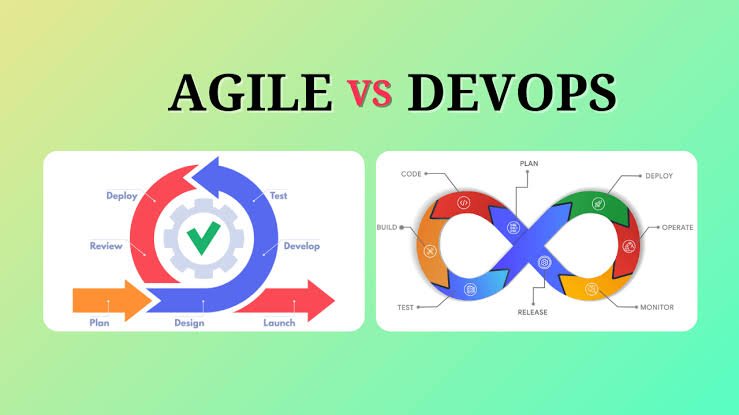
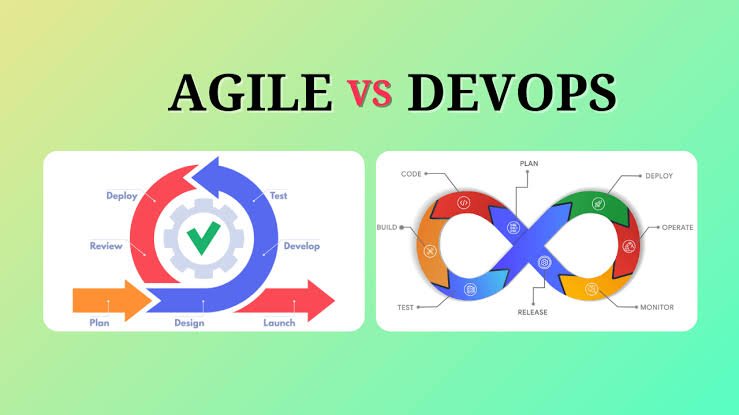
Although Agile and DevOps are closely related, they address different aspects of the software delivery lifecycle. Agile focuses on iterative development, customer feedback, and adapting to changing requirements. DevOps extends collaboration across development and IT operations, emphasizing automation, continuous integration, continuous delivery, infrastructure management, and reliable software releases. Both approaches encourage teams to work more effectively, but they use different practices to achieve their goals.
Understanding DevOps vs. Agile is important for organizations planning to modernize their software engineering processes. Agile can help teams build the right product by delivering functionality in small increments and incorporating feedback regularly. DevOps helps teams deliver and operate that software reliably by connecting development activities with deployment, monitoring, and operational improvement.
Rather than treating Agile and DevOps as competing methodologies, organizations should understand how they complement each other. Agile helps teams manage how software is planned and developed, while DevOps improves how software moves into production and remains reliable after release. When integrated effectively, these approaches create a continuous feedback loop between customers, developers, testers, and operations teams.
What Is Agile?
Agile is an approach to software development that emphasizes iterative progress, collaboration, customer feedback, and the ability to adapt to change. Instead of attempting to define every requirement at the beginning of a project and delivering the complete product at the end, Agile teams divide work into smaller increments. They develop, test, review, and refine these increments as they learn more about user needs and business priorities.
Agile is guided by the principles of the Agile Manifesto, which emphasizes individuals and interactions, working software, customer collaboration, and responding to change. These values encourage teams to prioritize practical outcomes and continuous learning rather than relying exclusively on rigid plans and extensive documentation.
For example, a company developing an e-commerce application might begin with essential product browsing and checkout functionality. After releasing an initial version, the team gathers user feedback, reviews usage patterns, and prioritizes improvements for subsequent iterations. Instead of waiting until every planned feature is complete, the organization can deliver useful functionality earlier and adjust its roadmap as requirements evolve.
Agile is an umbrella approach rather than a single prescribed process. Scrum and Kanban are two widely used methods associated with Agile practices. Scrum organizes work into time-boxed sprints, with defined roles, events, and a prioritized backlog. Kanban emphasizes visualizing work, limiting work in progress, and improving the flow of tasks through a system.
The main objective of Agile is to help teams deliver customer value through frequent feedback and incremental development. It can improve transparency, make changing priorities easier to manage, and reduce the risk of investing heavily in features that customers do not need.
Key Characteristics of Agile
Agile teams organize work into manageable increments, allowing progress and assumptions to be reviewed regularly. Requirements are prioritized according to business value, customer needs, and available capacity. This approach makes it easier to adjust the development plan when market conditions change or new information becomes available.
Collaboration is another central characteristic. Product owners, developers, testers, designers, and stakeholders communicate frequently to clarify requirements and resolve issues. Regular reviews and retrospectives help teams evaluate what they have delivered, identify obstacles, and improve how they work.
Agile also emphasizes continuous improvement. Teams use feedback from completed work to refine their planning, development, testing, and collaboration practices. However, Agile does not automatically guarantee faster releases or higher quality. Its benefits depend on disciplined execution, effective prioritization, appropriate testing, and meaningful stakeholder participation.
What Is DevOps?
DevOps is a set of practices, cultural principles, and technical capabilities designed to improve collaboration between software development and IT operations. It aims to reduce the barriers that traditionally existed between teams responsible for building software and teams responsible for deploying, maintaining, and supporting it.
In conventional software delivery environments, developers might complete an application and hand it over to operations for deployment. Operations teams would then discover configuration problems, missing dependencies, performance concerns, or other issues that were difficult to address late in the process. DevOps encourages shared responsibility for the entire software lifecycle, from code changes to production reliability.
DevOps commonly incorporates continuous integration (CI), continuous delivery or deployment (CD), automated testing, infrastructure as code, configuration management, observability, and automated release processes. These practices help teams validate changes consistently and reduce manual work across development, testing, deployment, and operations.
Consider a financial technology company that releases updates to its online payment platform. With DevOps practices, developers commit code to a shared repository, automated pipelines run tests and security checks, and deployment processes promote approved changes through appropriate environments. Monitoring systems then track service health, errors, latency, and other operational indicators. If an issue occurs, development and operations teams can investigate it together.
DevOps is not simply a collection of tools. Purchasing a CI/CD platform or adopting containers does not automatically create a DevOps culture. Effective DevOps requires shared ownership, automation, reliable feedback, well-defined operational responsibilities, and a commitment to learning from both successful releases and failures.
Key Characteristics of DevOps
Automation is one of the most visible DevOps characteristics. Automated builds, tests, deployments, infrastructure provisioning, and configuration checks reduce repetitive work and make software delivery more consistent. Automation also helps teams detect problems earlier, when they are generally easier to diagnose and correct.
Continuous integration encourages developers to integrate code changes frequently and validate them through automated checks. Continuous delivery keeps software in a deployable state, while continuous deployment automatically releases qualifying changes to production when the required conditions are satisfied. These practices are related but not identical, and organizations can adopt them according to their risk tolerance and operational requirements.
DevOps also emphasizes monitoring and feedback from production systems. Logs, metrics, traces, alerts, and user experience indicators help teams understand how applications behave under real-world conditions. This information can influence future development priorities and reveal problems that were not visible during testing.
Infrastructure as code and standardized environments further support repeatability. By defining infrastructure through version-controlled configuration, teams can create and update environments more consistently, review infrastructure changes, and reduce configuration drift. Together, these practices help organizations improve delivery speed without neglecting stability, security, or reliability.
DevOps vs. Agile: Key Differences
Agile and DevOps share a focus on collaboration, feedback, and continuous improvement, but they emphasize different parts of the software lifecycle. Agile primarily structures how teams plan, prioritize, and develop software. DevOps focuses on connecting development with deployment and operations so that software can be released and maintained reliably.
| Comparison factor | Agile | DevOps |
|---|---|---|
| Primary focus | Iterative software development and customer value | Collaboration across development, delivery, and operations |
| Main objective | Build the right product through feedback and adaptation | Deliver and operate software reliably and efficiently |
| Scope | Primarily planning, development, and iterative delivery | Extends across build, test, release, deployment, and operations |
| Typical practices | Sprints, backlogs, reviews, retrospectives, user stories | CI/CD, infrastructure as code, monitoring, automation, release management |
| Team collaboration | Product, development, testing, and stakeholders | Development, operations, security, testing, and other delivery stakeholders |
| Automation | Helpful but not mandatory in every Agile workflow | A major enabler of consistent and repeatable delivery |
| Feedback sources | Customers, users, product metrics, sprint reviews | Automated pipelines, production monitoring, incidents, and user signals |
| Common measurements | Product outcomes, cycle time, sprint progress, customer satisfaction | Deployment frequency, lead time for changes, change failure rate, recovery time |
| Typical challenge | Poor prioritization or ineffective feedback | Fragmented ownership, unreliable automation, or weak operational practices |
| Relationship | Guides iterative planning and development | Helps deliver, operate, and improve software continuously |
The distinction is not absolute. Agile teams can use sophisticated automation, and DevOps teams can use Agile planning practices. The comparison describes their primary emphasis rather than suggesting that the two approaches must operate independently.
How Agile and DevOps Work Together
Agile and DevOps become particularly effective when organizations connect iterative development with automated delivery and production feedback. Agile helps teams identify valuable features and organize work into manageable increments. DevOps provides the engineering practices and operational feedback needed to move those increments into production safely.
Imagine a team building a cloud-based HR management platform. The product owner prioritizes employee onboarding improvements based on customer feedback. Developers work on the highest-priority features within an Agile iteration, while testers validate functionality and usability. A DevOps pipeline automatically builds the application, runs unit and integration tests, performs relevant security checks, and prepares the release for deployment.
Once the feature reaches production, monitoring tools track errors, response times, and usage. Customer support reports and product analytics reveal whether the improvement solves the intended problem. The team uses this information to refine its backlog and determine the next set of changes. This creates a feedback loop in which product development and operational learning reinforce each other.
The combination can reduce the time between identifying a customer need and delivering a reliable solution. It can also make releases less risky because changes are smaller, automated validation occurs earlier, and teams share responsibility for production outcomes.
However, organizations should avoid assuming that combining Agile ceremonies with CI/CD tools is sufficient. If development teams optimize for completing sprint tasks while operations teams are measured only on avoiding changes, conflicting incentives may persist. Shared goals, clear ownership, and end-to-end performance measures are essential for realizing the benefits of both approaches.
Benefits of Agile
Agile helps organizations respond to changing requirements without repeatedly restarting the entire development process. By breaking work into smaller increments, teams can validate assumptions earlier and reprioritize based on new information. This is valuable in competitive markets where customer expectations, regulations, and business strategies can change during a project’s lifetime.
Frequent stakeholder engagement also improves product alignment. Demonstrations, reviews, and feedback sessions give stakeholders opportunities to identify missing functionality or misunderstandings before they become expensive problems. Product teams can prioritize features based on business value rather than treating every initial requirement as equally important.
Agile can improve transparency by making work, priorities, dependencies, and obstacles visible. Backlogs and visual boards help teams understand what is planned, in progress, and completed. Retrospectives create opportunities to examine collaboration issues, recurring delays, and quality problems.
Nevertheless, Agile works best when teams have clear product priorities and access to timely feedback. Poorly managed backlogs, constant priority changes, or unrealistic commitments can reduce its effectiveness. Iterative planning should provide flexibility without removing accountability for outcomes.
Benefits of DevOps
DevOps can shorten software delivery cycles by automating repeatable activities and reducing the delays associated with manual handoffs. Automated pipelines allow teams to validate changes consistently, while infrastructure as code and standardized deployment processes reduce environment-related inconsistencies. Smaller, more frequent releases can also make individual changes easier to investigate when something goes wrong.
Reliability is another important benefit. Automated tests, deployment safeguards, observability, and well-defined recovery procedures help teams detect and respond to production problems. When development and operations share responsibility, production feedback can influence engineering decisions earlier rather than remaining isolated within the support function.
DevOps can also improve resource utilization. Automation reduces repetitive operational work, while monitoring and infrastructure management practices help teams identify capacity issues and inefficient resource consumption. Cloud-native environments can benefit from standardized provisioning, automated scaling, and consistent configuration management.
These benefits depend on implementation quality. Poorly designed pipelines can propagate defects faster, excessive automation can obscure accountability, and inadequate monitoring can leave teams unaware of failures. DevOps should therefore balance speed with testing, security, change management, and operational resilience.
Common Challenges When Implementing Agile and DevOps
One major challenge is cultural resistance. Agile requires teams to accept incremental delivery, changing priorities, and regular feedback. DevOps requires development and operations to move away from isolated responsibilities toward shared accountability. Employees accustomed to traditional handoffs may find these changes difficult, especially when organizational incentives continue to reward individual departments rather than end-to-end results.
Another challenge is treating frameworks and tools as substitutes for problem-solving. Introducing sprint planning without improving prioritization may simply create more meetings. Installing a deployment pipeline without reliable tests may automate the release of defects. Organizations should identify the specific delivery problems they want to solve and adopt practices that address those problems directly.
Legacy systems can also slow adoption. Older applications may lack automated tests, depend on manual deployments, or require specialized infrastructure. Teams may need to modernize build processes, improve application observability, or introduce automation gradually rather than attempting a complete transformation at once.
Security and compliance present additional considerations. Faster delivery should not mean bypassing security reviews or weakening access controls. Integrating security into development and operations practices—often described as DevSecOps—helps teams incorporate code scanning, dependency checks, secrets management, policy enforcement, and appropriate approval processes into delivery workflows.
Finally, organizations need meaningful measurements. Tracking the number of completed user stories or deployments alone does not establish business success. Teams should connect engineering measures with reliability, customer experience, delivery predictability, and the outcomes the product is expected to produce.
How to Measure Agile and DevOps Performance
Agile and DevOps require related but distinct measures because they focus on different aspects of software delivery. Agile metrics can help teams understand how effectively they prioritize, develop, and deliver valuable functionality. DevOps metrics can reveal how efficiently changes move into production and how reliably the resulting services operate.
For Agile, teams may track cycle time, work-in-progress levels, delivery predictability, escaped defects, and customer feedback. Velocity can help a stable Scrum team understand its own historical capacity, but it should not be treated as a productivity score or compared directly across teams. The quality and value of delivered work matter more than the volume of story points completed.
For DevOps, the four widely used DORA metrics provide a useful starting point: deployment frequency, lead time for changes, change failure rate, and failed deployment recovery time. These measures help teams assess software delivery throughput and stability. They should be interpreted in context rather than used as isolated performance targets, since optimizing a single metric can create undesirable behavior.
Organizations should also measure customer-facing outcomes such as application availability, latency, error rates, satisfaction, and successful completion of key user tasks. These indicators help teams determine whether faster delivery is actually improving the service.
The most useful measurement approach combines product outcomes, delivery flow, software quality, and operational reliability. It gives teams enough information to identify bottlenecks without encouraging them to maximize activity at the expense of meaningful results.
Best Practices for Adopting Agile and DevOps
Organizations should begin by identifying their current bottlenecks. Some teams may struggle with unclear requirements and changing priorities, while others may face long release cycles, manual deployments, or recurring production incidents. Understanding these issues helps leaders decide where Agile practices, DevOps capabilities, or both can provide the greatest benefit.
Start with a manageable pilot. Select a product or service with clear ownership and a team willing to experiment. Introduce a small set of practices, such as a prioritized backlog, regular feedback sessions, automated testing, and a repeatable deployment pipeline. Evaluate the results and refine the approach before expanding it across the organization.
Invest in automation gradually and focus on high-value tasks. Version control, automated builds, reliable test suites, repeatable environment provisioning, and deployment checks can create a strong foundation. Teams should establish appropriate monitoring and rollback or recovery mechanisms before increasing release frequency.
Build cross-functional collaboration into the operating model. Developers, testers, operations engineers, security specialists, and product stakeholders should work toward shared outcomes. This does not require every person to perform every task, but it does require clear ownership, effective communication, and collaboration when issues cross team boundaries.
Finally, make continuous improvement a practical habit. Review delivery data, examine production incidents without focusing solely on blame, and identify recurring causes of delay or failure. Use these findings to improve workflows, architecture, testing, and team practices. Sustainable improvement comes from repeated learning rather than a one-time transformation initiative.
The Future of Agile and DevOps
The future of software delivery is likely to involve greater integration between product management, software engineering, platform engineering, security, and operations. Organizations increasingly need development processes that respond quickly to business needs while maintaining strong controls over reliability, cost, and risk.
AI-assisted development and operations are also changing how teams approach repetitive tasks. AI tools can help generate code, suggest tests, summarize logs, identify anomalies, and assist with incident investigation. However, these capabilities do not remove the need for engineering judgment, secure development practices, validation, or human accountability for important decisions.
Platform engineering can further support Agile and DevOps by providing reusable internal platforms, standardized deployment workflows, and approved infrastructure capabilities. Instead of every team building its own delivery system, developers can use shared services that reduce cognitive load and make secure, reliable practices easier to follow.
Organizations may also place greater emphasis on developer experience and measurable product outcomes. Faster releases alone are insufficient if systems are unreliable or features fail to solve customer problems. Agile feedback loops and DevOps operational signals can help teams connect development priorities with the real-world performance of their software.
The most successful organizations will not necessarily be those that adopt the largest number of tools or ceremonies. They will be the ones that create a disciplined environment where teams can learn quickly, deliver useful changes, operate systems responsibly, and continuously improve.
Conclusion
Understanding DevOps vs. Agile helps organizations recognize that these approaches solve related but different problems. Agile focuses on iterative development, customer collaboration, and adapting product plans as requirements evolve. DevOps connects development with operations through automation, continuous delivery, monitoring, and shared responsibility for production outcomes.
Agile can help teams build the right software, while DevOps helps them deliver and operate that software more reliably. Neither approach automatically guarantees success, and both require thoughtful implementation, suitable measurements, and a culture of continuous improvement.
For most modern software organizations, the strongest strategy is not to choose one approach over the other. It is to combine Agile planning and feedback with DevOps engineering and operational practices. By aligning product priorities, automated delivery, and production learning, businesses can improve delivery flow, strengthen reliability, and respond more effectively to customer needs.
